
Called and Followed
Chapter Fourteen: Celebration

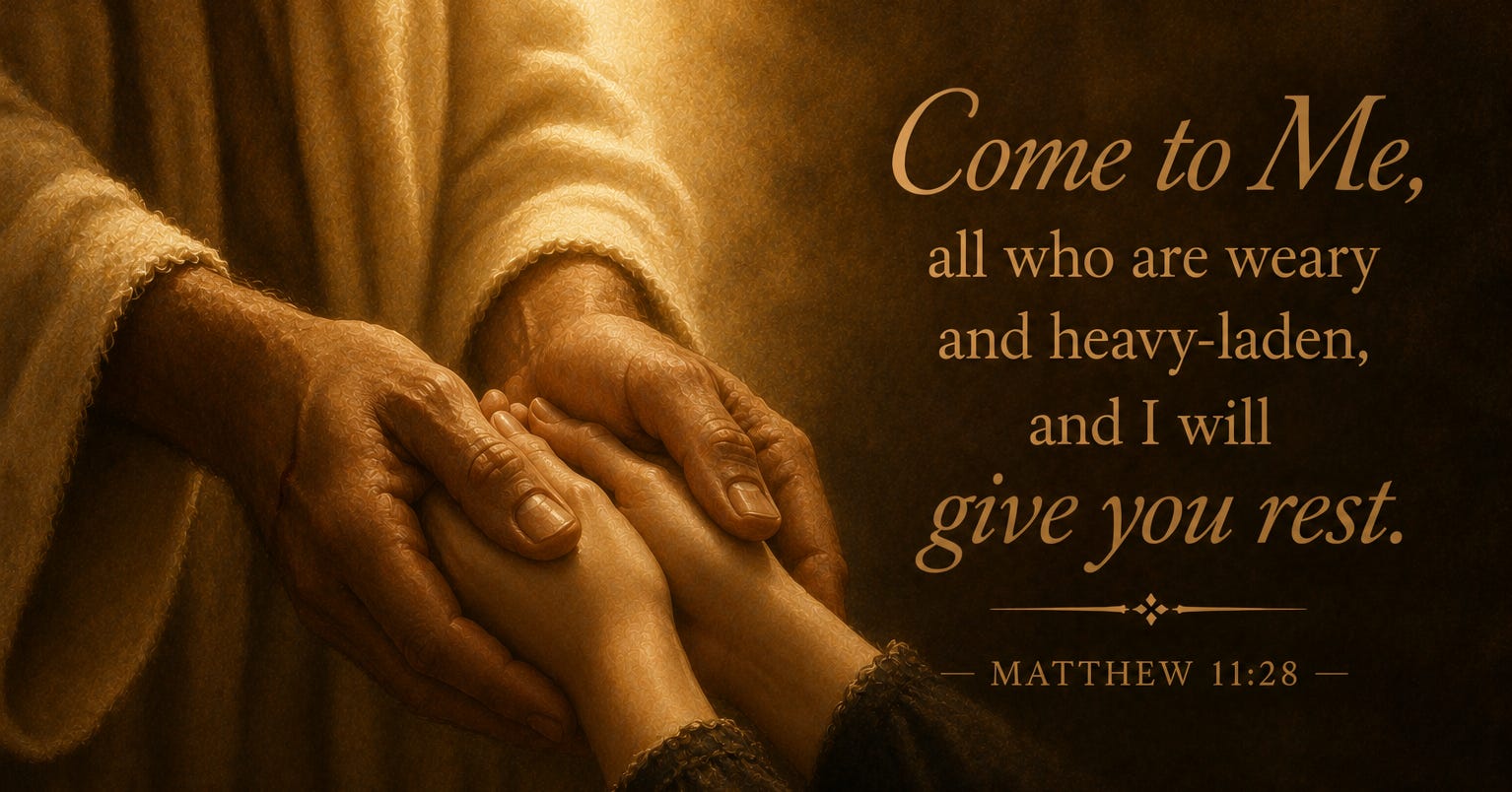
Kathleen hesitates just inside the doorway.
The room opens wide before her. Rows of familiar faces everywhere. Too many eyes, even when none of them are looking directly at her.
Shame stirs immediately.
It does not announce itself. It never does. It slips in low and practiced, threading its way through the quiet.
All these people are here because of you, because you needed her. Because you were not strong enough to let her stay home. You are still not strong enough.
Kathleen’s shoulders draw inward. Her feet remain planted, one step from retreat. I feel the words press against her, seeking purchase where grief has already worn the ground thin.
She does not lift her head.
That is when Pete sees her. His gaze lands on her face, and his expression lights up. He smiles, small and gentle and unforced.
Kathleen looks up and sees him, and the whisper fractures.
Confusion flickers across her face, the expectation of rejection still clinging to her posture.
Pete steps toward her before Shame can find its voice again.
“I’m really glad you came,” he says quietly.
The words settle without resistance. No accusation. No hesitation. No room for the lie to continue.
Kathleen swallows. “I didn’t know if I should.”
“You should,” Pete says, without pause. He turns slightly and gestures down the aisle. “You guys can come sit with us. You’re family.”
For a moment, Kathleen remains still, caught between the echo of what was whispered and the reality standing in front of her.
Pete starts down the aisle, trusting her to follow.
She does.
I feel the atmosphere alter immediately. Shame does not vanish. But it loosens, its voice thinned by the presence of something stronger.
They move together to the front row. Ruth squeezes her arm and whispers, “I’ll be right behind you. You need them,” she motions toward Pete and Lydia’s mother, “more than you need me for this.”
Lydia’s mother looks up first.
The moment her gaze finds Kathleen, she rises without hesitation and crosses the space between them. There is no pause. No careful consideration. Her arms wrap fully and firmly around Kathleen, as though embracing her daughter.
Kathleen stiffens for half a breath.
Then she breaks.
“I’m so glad you’re here,” Lydia’s mother whispers into her hair.
There is no blame in her voice. Only relief. Only welcome.
Tears come hard now, unrestrained.
Lydia’s father stands next. He places a hand at Kathleen’s back, solid and steady, then draws her into a brief embrace of his own.
“I’m so sorry,” Kathleen begins.
“No.” The single word leaves no room for argument. “None of this is your fault.” He pauses for a moment to lift her face towards his. “You are not the one to blame, and I will hear nothing to the contrary.”
His words are quiet, full of love. There is no harshness, no condemnation, just gentle, fatherly redirection.
“You’re family. You have been since the day we met you. Do you understand me?” he says quietly.
The words land where shame had been trying to root.
Kathleen nods, unable to speak. Her breath shakes, held together now by the people refusing to let her stand alone.
They guide her into the pew with them. She settles between Lydia’s mother and Pete.
I watch the weight begin to lift, hopeful it will continue.
The service has not yet begun, and already something essential has taken place. Shame has been interrupted. Isolation is held at bay by connection.
I bow and keep my place, bearing witness as borrowed hope gives way, slowly and quietly, to something truer.
The pastor stands at the front, hands resting against the pulpit as though it steadies him. I sense the pause is not for effect, but for composure. He knows this family. He has walked with them long enough that this loss is personal.
When he speaks, his voice is warm and measured.
“We are here today because Lydia mattered.”
The words move through the room, settling into places already made tender by grief.
“She mattered as a daughter, deeply loved and fiercely protected. As a sister, whose presence shaped the rhythms of a home. As a granddaughter and a niece, whose laughter filled rooms and whose absence now leaves them too quiet.”
Kathleen startles at a soft sniffle beside her.
Shame stirs immediately.
It presses close, familiar and practiced, sliding its voice beneath the pastor’s words.
They are crying because of you. They know why this happened. They are being kind, not honest.
Kathleen’s shoulders draw inward.
Lydia’s mother lifts her hand to her face, then lets it fall again. Without looking, and seemingly without thinking, she reaches across the space between them and grabs Kathleen’s hand.
She squeezes.
Shame falters, unable to maintain the lie beneath the boundary connection creates. It withdraws to the edges with the others, and I study the movement with growing curiosity. The Corrupters huddle in uneasy clusters, their agitation passing rapidly between them.
The pastor continues.
“She mattered as a friend. The kind who listened without rushing to fix. The kind who showed up, even when it would have been easier not to.”
Deceit moves in now, quick to follow.
You were the one she had to show up for. You were the one who needed her. Everyone here knows that.
Kathleen’s breath tightens.
Pete shifts beside her. His knee brushes hers as he adjusts, grounding, unintentional, real.
The whisper breaks, and Deceit is forced back.
The pastor’s voice softens.
“I have known Lydia since she was little. I have watched her grow. I have prayed with her family in moments of joy and moments of uncertainty. This loss is felt deeply by all of us who loved her.”
Kathleen swallows hard.
Shame presses forward again, but Isolation collides against it, both scrambling for space before Kathleen’s attention settles elsewhere. When it does reach her, its voice is frayed.
You do not belong here. This is their grief, not yours. You have no right to sit among them.
Lydia’s mother leans into Kathleen’s side, seeking balance, comfort, or simply closeness.
Kathleen changes her position without thinking, supporting the weight.
The lies do not find purchase in her mind as they have before.
The Corrupters fall back again, pacing the edges now. Their voices no longer flow smoothly. They interrupt one another, scrambling for ground.
The pastor looks toward Lydia’s parents.
“There is real grief here today,” he says. “And it deserves space.”
Kathleen feels Lydia’s mother’s hand tighten around hers again.
Deceit rushes forward and hisses once more, desperate.
They are pretending. They will resent you later. They are too broken to tell you the truth.
Pete’s hand settles briefly at Kathleen’s back, steady and sure, then withdraws.
The words scatter.
I see it clearly now. Each time the Corrupters press in, her focus is drawn outward instead. To warmth. To presence. To the living reality of people who choose her repeatedly without explanation. They move like a tide that cannot decide whether to advance or flee.
Each mention of peace drives them backward.
Each flicker of uncertainty draws them rushing forward again.
“This service is called a celebration of life,” the pastor continues, “not because death does not hurt, and not because we are pretending this is easy. It is a celebration because Lydia’s life was a gift.”
Kathleen blinks hard. Her gaze lifts briefly from the floor. She looks at Pete. At Lydia’s mother. At the hands still joined with hers.
Shame snarls another lie.
If you were stronger, this would not hurt so much.
The thought does not land.
It slips past her, unanswered.
I feel the agitation spike. The Corrupters spiral as their whispers lose rhythm when Kathleen’s attention remains anchored in the room, in the people beside her, in what is being offered rather than what is being accused.
The pastor lowers his gaze and rests both hands against the pulpit.
“Let us pray.”
The room follows his lead. Heads bow. Hands still. The space gathers itself.
Kathleen hesitates only a moment before lowering her head as well. Lydia’s mother’s hand remains clasped around hers. Pete’s shoulder stays close enough that she can feel the warmth of him beside her.
Shame presses in again, unsettled by the quiet.
You should not pray here. These words are not for you. God knows what you did.
The pastor’s voice breaks through, steady and reverent.
“Father God, we come to You today carrying grief that feels heavier than our words.”
The whisper stutters.
“We ask first for comfort,” he continues. “Not the kind that explains away our pain, but the kind that meets us in it. The kind that holds us when we do not know how to stand on our own.”
Kathleen’s breath shudders. Lydia’s mother squeezes her hand once, firm and grounding.
The Corrupters hiss, irritated now. Peace has always disrupted them.
“We ask for peace,” the pastor says, “the peace that passes understanding. Peace that doesn’t depend on answers or timelines. Peace that guards hearts that feel too broken to protect themselves.”
Deceit almost shouts over the others.
There is no peace for you, not after this
Pete’s knee presses briefly against Kathleen’s. Solid. Real.
The whisper fractures.
“And Lord, we thank You,” the pastor says, his voice softening, “for the gift that Lydia was. For the time You shared her with us. For her laughter, her kindness, her presence in our lives. We do not thank You because this is easy. We thank You because she was real, and she mattered, and she was loved.”
Kathleen’s head dips lower. Tears slip free, landing soundlessly against her hands.
The Corrupters recoil again, agitation rising as gratitude fills the space they were trying to occupy.
“And finally, Lord,” the pastor continues, “we ask for strength. Not the strength to pretend we are fine. But the strength to take the next step. To breathe through the next moment. To carry one another when the road ahead feels impossible.”
The word strength resonates.
I feel it move through the room like a current, touching Kathleen even as she resists it.
“Be near to us today,” the pastor prays. “Be near to this family. Be near to every heart that is hurting. And remind us that we do not walk this road alone. Amen.”
The room remains bowed for a breath longer than required before the echoing “Amen” comes.
Kathleen stays still, hands held, surrounded by grief and something gentler pressing in alongside it.
The Corrupters retreat to the edges, restless and disorganized, their whispers thinning as the prayer settles.
Then the temperature drops, subtle but certain. I feel it before I see it. The older presence has returned, unhurried and silent. It enters as though invited by the testing of what has just been named.
Comfort. Peace. Strength.
“Enough.”
It addresses the other Corrupters in the room, calmly silencing them in a way that showcases their reverence for it. It glides toward Kathleen with unsettling ease, stopping close enough that it could reach out again if its lies are met with agreement.
I straighten, on high alert now. If permitted, I will not stand by while it assaults her.
The pastor lifts his head and continues.
“Many of you have spoken to me this week about Lydia’s strength,” he says. “How steady she was. How unshaken. How she carried herself with a quiet confidence that seemed beyond her years.”
Kathleen’s breath tightens.
The older presence moves closer.
Strength, it whispers. You mean pretending. You mean hiding fear better than everyone else.
The pastor goes on.
“She was not loud. She did not demand attention. Her strength showed itself in consistency. In presence. In love that did not withdraw when things became difficult.”
The whisper sharpens.
She stayed because she had to. Because you were never strong enough to stand alone.
Kathleen’s shoulders curl inward.
Every instinct in me surges forward, sharp and immediate. She is breaking. I step toward her, ready to close the distance.
A hand rests on my shoulder, and I know it at once.
It does not restrain me by force.
The touch steadies me instantly.
Around the room, the Corrupters recoil. Some cower outright. Others whimper low in their throats.
Jesus stands beside me.
“I’ve got this one,” He says quietly.
The words are not a command. They are assurance.
I still, anticipation dawning as quickly as understanding.
He steps past me, unhurried, and approaches Kathleen. He does not touch her, or kneel beside her, or lift her chin.
He does not block the older presence, nor does He force it away.
He stands beside it.
“She stayed because she loved you,” He says quietly. The words do not sound new. They echo.
Kathleen has heard them before.
From Lydia.
From Ruth.
From Pete.
The pastor’s voice steadies.
“That kind of strength does not come from personality,” he says. “It does not come from willpower. It is not something we manufacture when life becomes heavy.”
The older presence presses harder.
Then where did it come from? If strength exists, why are you here, broken like this? Why does it hurt this much?
Kathleen’s hands tremble in her lap.
Jesus answers again, just as quietly.
“Strength is not the absence of pain,” He says. “It is knowing where to stand, Who to cling to, when pain arrives.”
I remember Ruth’s words from the car ride. Anchored.
The pastor continues, unaware of the exchange unfolding.
“Lydia’s strength came from the Lord,” the pastor says. “From trusting Him when life felt uncertain. From placing her hope not in what she could carry on her own, but in what God promised to carry for her.”
The older presence coils tighter.
Hope failed her. Look where it got her. If God really loved her, it turns to snarl at Jesus before continuing, she would still be here.
Kathleen’s breath stutters.
Jesus is in no hurry, and He chooses not to address the accusing presence. “Hope did not end that day.” He smiles, remembering, “It welcomed her home.”
Kathleen’s eyes burn. Tears gather, silent and hot.
The pastor alters his stance slightly.
“And that same strength,” he says, “is not reserved for a select few. It is not something you earn. It is not something you prove yourself worthy of. It is for everyone.”
The words settle, not as argument, but as invitation.
The older presence reacts violently now, its calm slipping.
Not you. Not after what you caused. You are not worthy.
Jesus counters, firm but gentle.
“Your worth was not determined by what you did,” He says, “but by what I did for you.”
I can hear the echo of voices in her life.
Ruth’s voice that morning.
Pete’s voice. Still choosing.
Kathleen’s hands rise to her chest, fingers pressing hard as if to hold her together.
The pastor’s voice lowers.
“If you are here today and you feel that stirring,” he says, “that pull toward peace, toward comfort, toward something stronger than yourself, I want you to know that strength is available to you right now.”
I take a step closer. I ache to know whether she hears Him. Does she feel it? I can see His peace offering to draw her in. Will she allow it?
The older presence leans close, desperate.
If you choose this, you lose control. If you trust, you will be disappointed again. You will not survive another loss. You can’t do this alone. And now that Lydia’s gone, that’s what you are. Alone.
Jesus steps closer.
He does not touch her.
“Kathleen,” He says.
She startles.
Not with sound. With recognition.
“I’m here,” He says. “I love you. Talk to Me.”
The room dims around her. The noise fades. The whispers collide and unravel.
The older presence twists backward, fury and fear colliding beneath the pressure of His truth.
You are not strong enough.
Jesus answers, final and certain.
“You do not have to be.”
Kathleen slides from the pew to her knees.
Tears fall freely now, unchecked.
Time seems to stand still around her.
Her lips part.
And she begins to pray.
Chapter Fifteen: Surrender - Coming soon!